One Paycheck for Every Bill
October 21, 2026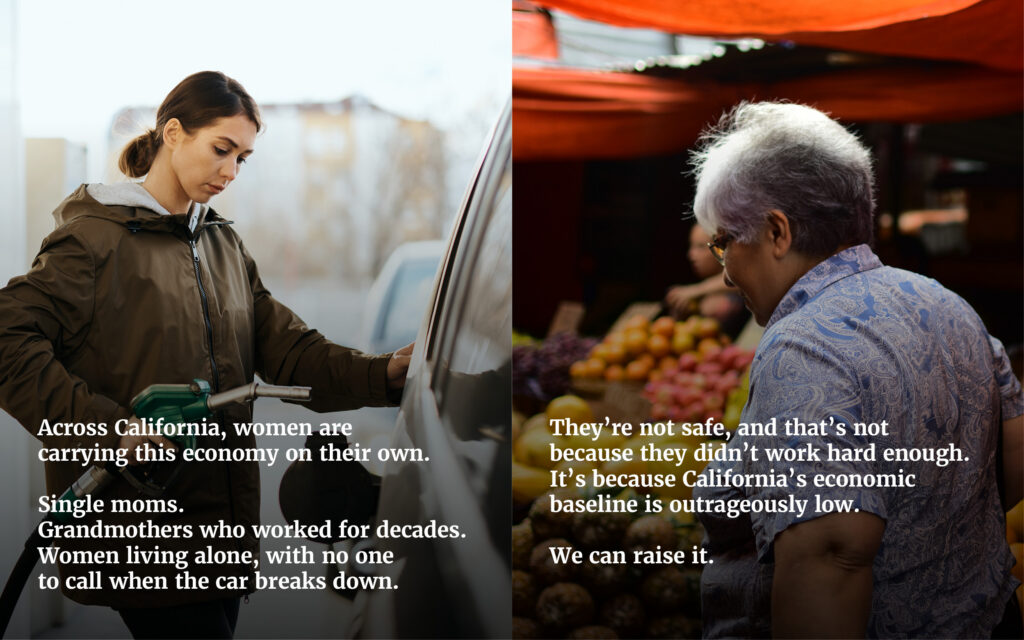
Miriam spent the pandemic helping other people find a place to live.
She worked for a San Diego nonprofit that provided housing services. Every day she put on her mask, wiped everything down, and helped people “left and right.”
“I was working full time. I was making good money. I had a place to live.”
Then a series of surgeries forced her to stop working. She was told she couldn’t get unemployment because of where she worked. Her life savings disappeared. She lived in her car for a while, until she sold it to pay for a trip to see relatives on the East Coast who were seriously ill with COVID.
When we met Miriam in San Diego, she was living in a tent. The best job she could find paid minimum wage.
Miriam didn’t fail. The floor gave way under her.
Saida is a single mom of two in the San Fernando Valley. When the pandemic hit, her husband was already sick with cancer. Her hours at a fast-food restaurant were cut. Her family caught COVID again and again. After the third time, her husband died. The one thing that kept Saida and her kids off the street was rent of $920 a month. “Never in my life would I have survived,” she said.
One affordable bill kept her family from losing everything.
Across California, women are carrying this economy on their own. Single moms. Grandmothers who worked for decades and now can’t make rent. Women living alone, with no one to call when the car breaks down.
One mom in San Mateo rents a single room in a house full of strangers. Her children do their homework locked in that room, sharing one phone. “I have not been able to pay the rent,” she told us. “How do I pay for food?”
One paycheck has to cover everything
A few years ago, we held roundtable discussions with women who struggled to earn even a modest income and meet California’s rising costs. We wanted to learn how they were recovering from the pandemic’s economic devastation.
One paycheck has to cover everything. That includes rent, the electric bill, groceries, gas, a copay, and a kid’s new shoes. There’s no second income and no one to split it with. And there’s no cushion when something goes wrong.
The numbers are hard to read. Eighty-one percent of single moms with young children in California earn less than it actually costs to live here. Among women 75 and older who live alone and rent, half spend more than half of their income just to keep a roof over their heads.
A woman in San Mateo told us simply: “The amount of rent here takes more than half my salary. A person here in this area cannot live alone.” Another woman in San Diego was trying to hold it all together. “I feel like I’m doing the right thing,” she said. “But my family, they aren’t helping me at all. They are like, ‘You are a grown woman. You are on your own.'”
You are on your own.
Too many women in California hear that from family, employers, and systems that were supposed to catch them. That was 2022. It’s harder now.
These are our mothers. Our grandmothers. Our neighbors and friends. They’re not safe, and that’s not because they didn’t work hard enough. It’s because California’s economic baseline is outrageously low. When the floor is this low, one bad month is all it takes.
We can raise it. That means wages that cover what life really costs, tax credits like CalEITC that reach working women whether or not they have kids, and housing a woman can afford on one income.
If this makes you angry, good. Hold onto that.
And tell us: who is a woman in your life who needs to be celebrated?
Read more of Miriam’s story and the stories of the other women we met in our groundbreaking report.
Check out what Golden State Opportunity is doing to address this issue at our upcoming webinar on November 10.